
If you've been researching how to fix sunken concrete, you've run into two options: mudjacking (the old way) and polyurethane foam lifting (the modern way). Both lift concrete. The similarities end there. Here's an honest comparison from a company that has seen both methods in the field for years.
How Each Method Works
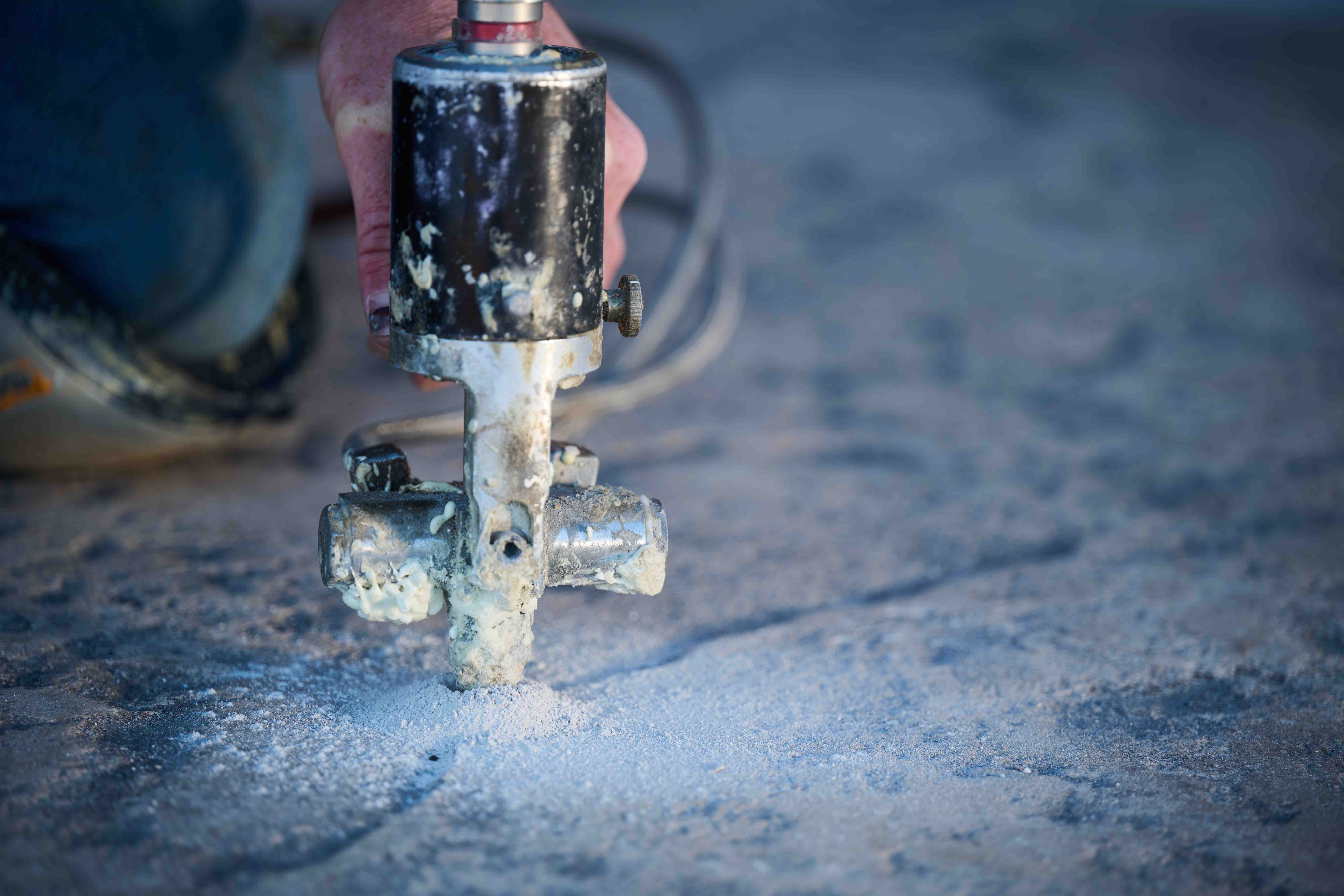
Mudjacking pumps a slurry of mud, sand, and cement through 2-inch holes drilled in your slab. The slurry fills the void and hydraulically raises the concrete. Foam lifting injects two-part polyurethane through 3/8-inch holes. The foam expands within seconds, fills voids, compacts loose soil, and lifts the slab with precision.
Cost Comparison
Mudjacking is cheaper upfront — typically 20-30% less than foam. But that number is misleading. Mudjacking slurry weighs 100+ pounds per cubic foot; it adds enormous weight to soil that was already too weak to support the slab. It's also water-soluble, so the same erosion that caused the original settlement washes the slurry out too. Most mudjacking jobs settle again within 2-5 years, and you pay twice.
Foam weighs about 2-4 pounds per cubic foot — roughly 2% of the weight of slurry — and is completely waterproof. It never washes out, never breaks down, and never adds load to weak soil. Most foam lifts are permanent.
Side-by-Side Breakdown
Here's how the two methods compare on the factors that matter:
- Hole size: Foam uses 3/8-inch holes (pencil eraser). Mudjacking needs 2-inch holes (pop can).
- Weight: Foam adds ~2-4 lbs/cu ft. Mudjacking adds 100+ lbs/cu ft on already-weak soil.
- Cure time: Foam is drivable in 15 minutes. Mudjacking needs 24-72 hours.
- Water resistance: Foam is waterproof. Mudjacking slurry erodes like the soil it replaced.
- Lifespan: Foam is typically permanent. Mudjacking commonly fails within 2-5 years.
- Precision: Foam expands in controlled stages for accurate lifts. Slurry is harder to meter.
Why Foam Wins Specifically in Colorado
Colorado's freeze-thaw cycles and expansive clay soil are exactly the conditions where mudjacking fails fastest. Water moves through our soil constantly — spring snowmelt saturates it, summer drought shrinks it. A water-soluble slurry sitting in that environment doesn't stand a chance long-term.
Polyurethane foam is closed-cell and hydrophobic. Water can't penetrate it, freeze inside it, or wash it away. Once it's under your slab, it's there for good — which is why we're comfortable backing qualifying foam lifts with a written warranty.