
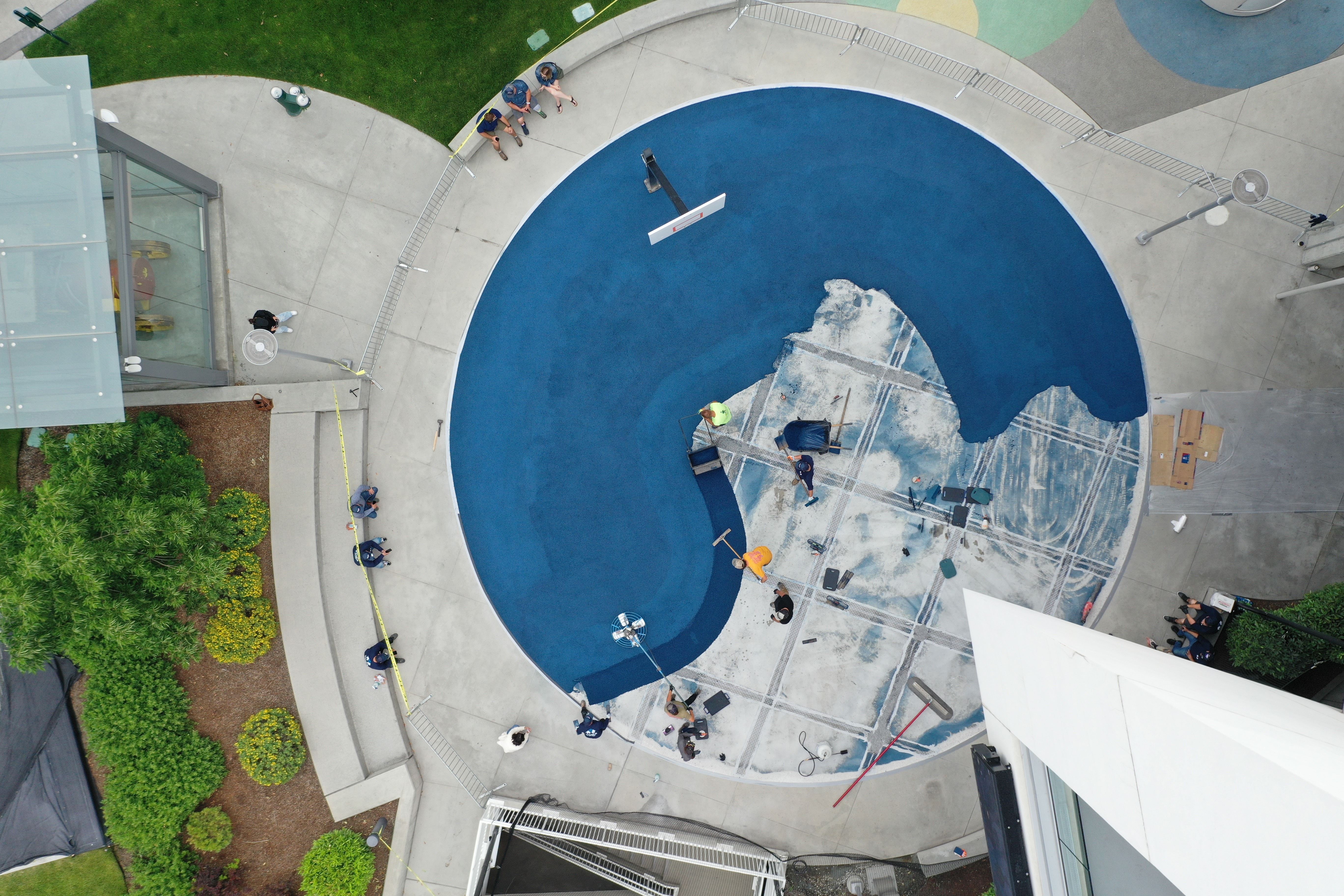
Homeowners planning a patio or pool deck upgrade almost always start by pricing stamped concrete. It's the default decorative option — but it's no longer the best one for most Colorado backyards. Here's an honest comparison between stamped concrete and Vuba Stone, the resin-bound stone system we install.
What Each Surface Is
Stamped concrete is freshly poured concrete that's colored and pressed with texture mats to mimic stone, brick, or slate. It requires full demolition of your existing concrete first, then a new pour, then stamping and sealing.
Vuba Stone is a resin-bound overlay: natural decorative stone mixed with UV-stable polyurethane resin and hand-troweled directly over your existing concrete. No demolition, no re-pour — your existing slab becomes the foundation.
Cost: Closer Than You Think
Stamped concrete typically runs $15-28 per square foot in Northern Colorado once you include demolition and haul-off of the old slab. Vuba Stone installs at a comparable $12-24 per square foot — without any demolition, because it goes over what you have.
But the real cost difference shows up after installation. Stamped concrete needs re-sealing every 2-3 years ($400-800 each time) to keep its color, and it cracks like any concrete — with the added problem that matching a stamped, colored patch is nearly impossible. Vuba Stone needs no re-sealing, doesn't fade, and carries a 15-25 year expected lifespan.
The Pool Deck Question
For pool decks specifically, the comparison isn't close:
- Slip resistance: Vuba Stone's textured stone surface is naturally slip-resistant when wet. Sealed stamped concrete is notoriously slippery around pools.
- Barefoot comfort: resin-bound stone stays cooler underfoot than dense sealed concrete in summer sun.
- Drainage: Vuba Stone is permeable — water drains through it instead of puddling.
- Freeze-thaw: permeability means water doesn't sit and freeze on the surface, the main killer of stamped finishes here.
Where Stamped Concrete Still Wins
Honesty matters: if your existing concrete is completely destroyed — broken into pieces, sunk beyond lifting — you need a new pour anyway, and stamping that new pour is a reasonable choice. Stamped concrete also offers pattern options (brick, cobblestone, slate looks) that a stone aggregate surface doesn't replicate.
But if your existing slab is structurally sound (or can be lifted and stabilized first, which we also do), an overlay saves you the demolition cost and delivers a longer-lasting surface.